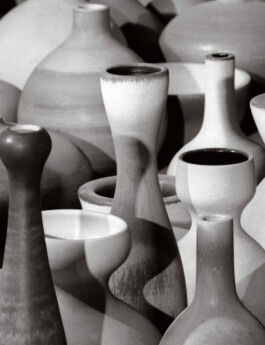
Ceràmica Cumella is a family-run ceramic workshop founded in 1880 in Granollers, near Barcelona. What began as a small traditional pottery studio focused on domestic and utilitarian objects has gradually evolved into an international reference in handcrafted ceramics for architecture and design.

001
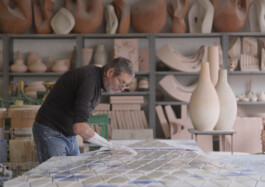
In its early years, the workshop was rooted in everyday production. Clay was shaped into functional pieces using local materials and inherited techniques, establishing a deep connection between craft, place, and daily life. This foundation of manual knowledge and material sensitivity continues to define the practice today.


002
003
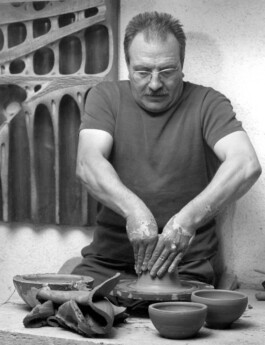
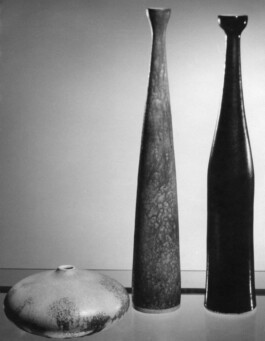
A turning point came with Antoni Cumella i Serret (1913–1985), who redefined the role of ceramics within the workshop. Trained in the family environment, he expanded the discipline beyond its traditional function through a continuous exploration of form, glaze, and volume. His work moved between sculpture and architecture, developing in parallel as a personal artistic practice and as a transformation of the workshop’s production.
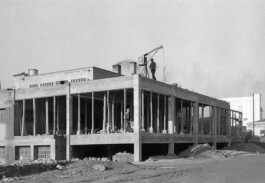
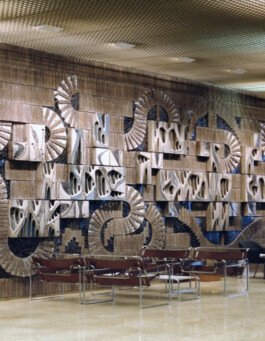
From the 1950s onwards, he began integrating ceramics into architectural space through murals, reliefs, and large-scale surfaces. Ceramics were no longer conceived as isolated objects, but as an integral part of the built environment. His introduction of stoneware and his experimental approach to material opened new technical and expressive possibilities.


004
005

006
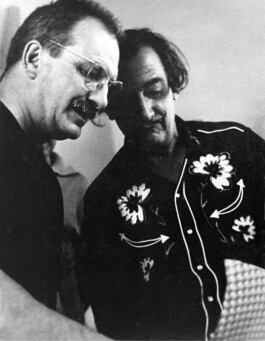
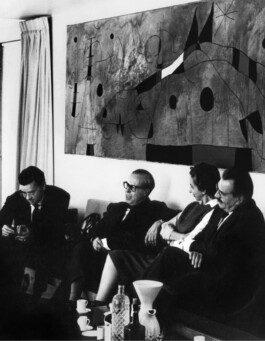
This evolution was shaped through close relationships with key figures of the 20th century, including artists such as Salvador Dalí and Pablo Picasso, and architects like José Luis Sert, Javier Carvajal and members of the Grup R. Within this context, ceramics became a medium positioned between disciplines, capable of contributing to both art and architecture.

007
Building on this legacy, Toni Cumella further developed the workshop’s direction towards contemporary architecture. His work maintained a strong artistic sensibility while introducing a higher level of technical precision, enabling the studio to collaborate on complex architectural projects and position itself internationally within the field of custom ceramic production.

008
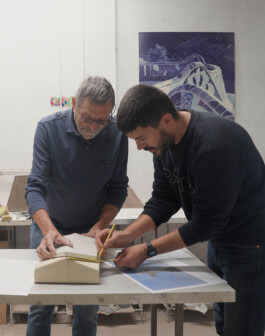
Today, under the direction of Guillem Cumella, the workshop continues to evolve. Expanding an already established international presence, he has strengthened collaborations with leading architectural studios and global brands, bringing the workshop’s work to a broader scale while maintaining its handcrafted essence. This new phase reinforces the ability of ceramics to operate across contexts, from local to global, without losing its material integrity.


009
010
© 2026 Ceràmica Cumella. All rights reserved. Website designed by Oriol Rodríguez.
Ceràmica Cumella is a family-run ceramic workshop founded in 1880 in Granollers, near Barcelona. What began as a small traditional pottery studio focused on domestic and utilitarian objects has gradually evolved into an international reference in handcrafted ceramics for architecture and design.
In its early years, the workshop was rooted in everyday production. Clay was shaped into functional pieces using local materials and inherited techniques, establishing a deep connection between craft, place, and daily life. This foundation of manual knowledge and material sensitivity continues to define the practice today.


A turning point came with Antoni Cumella i Serret (1913–1985), who redefined the role of ceramics within the workshop. Trained in the family environment, he expanded the discipline beyond its traditional function through a continuous exploration of form, glaze, and volume. His work moved between sculpture and architecture, developing in parallel as a personal artistic practice and as a transformation of the workshop’s production.
From the 1950s onwards, he began integrating ceramics into architectural space through murals, reliefs, and large-scale surfaces. Ceramics were no longer conceived as isolated objects, but as an integral part of the built environment. His introduction of stoneware and his experimental approach to material opened new technical and expressive possibilities.


This evolution was shaped through close relationships with key figures of the 20th century, including artists such as Salvador Dalí and Pablo Picasso, and architects like José Luis Sert, Javier Carvajal and members of the Grup R. Within this context, ceramics became a medium positioned between disciplines, capable of contributing to both art and architecture.

Building on this legacy, Toni Cumella further developed the workshop’s direction towards contemporary architecture. His work maintained a strong artistic sensibility while introducing a higher level of technical precision, enabling the studio to collaborate on complex architectural projects and position itself internationally within the field of custom ceramic production.

Today, under the direction of Guillem Cumella, the workshop continues to evolve. Expanding an already established international presence, he has strengthened collaborations with leading architectural studios and global brands, bringing the workshop’s work to a broader scale while maintaining its handcrafted essence. This new phase reinforces the ability of ceramics to operate across contexts, from local to global, without losing its material integrity.


© 2026 Ceràmica Cumella. All rights reserved. Website designed by Oriol Rodríguez.